Momentum Grows for Miro MCP as Users Embrace the Canvas for AI Collaboration
Calls to Miro’s MCP server surge past 16 million; MCP jumps the developer niche with individuals in non-engineering
Press Release Disclaimer: This is a press release distributed through the XPR Media network. It has not been independently verified by our newsroom.


Miro®, the collaboration and context layer for the AI era, has reported more than 16 million calls to its MCP server since its launch in February 2026, with usage more than doubling since May. In September alone, MCP calls are on track to reach 6 million*.
This press release features multimedia. View the full release here: https://www.businesswire.com/news/home/20260929837812/en/
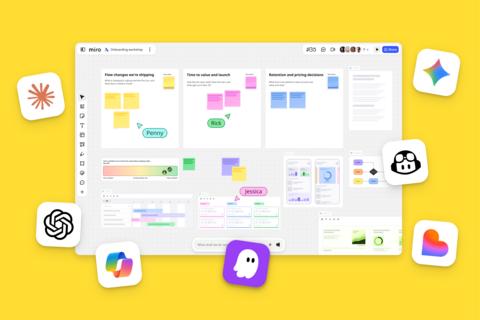
Miro’s MCP server is a Model Context Protocol integration letting AI tools connect to Miro boards—creating diagrams, tables, and canvas content, and reading existing board data programmatically.
Teams increasingly rely on AI to accelerate work—from discovery and planning to design and code. Yet most AI interactions happen in chat windows or static outputs that exist separately from the team’s actual workspace. Miro’s MCP server changes this by giving users a way to make the output from their AI tools visual, immediately editable, and accessible to the whole team on a shared canvas.
Miro user data shows Claude Desktop and Claude Code represent almost two-thirds of usage in August (65%). ChatGPT has become the second-largest client, growing 71% in users between August and September. In total, 15 different AI clients have now connected via the MCP integration; others include Microsoft Copilot, Gemini Enterprise, and Grok Build. Further analysis of the data also demonstrates that the Canvas is being leveraged as both an input and output for AI agents. 57% of August calls were Miro-to-code, where an agent reads a board and acts on it, and 41% were code-to-Miro, where agents generate boards, diagrams and layouts directly.
The data also indicates that the demographic of users adopting MCP has shifted. MCP has jumped the developer niche. Users in engineering and developer roles account for under a quarter of MCP users—product, design, marketing, operations and project management together outnumber engineers roughly two to one.
“The explosive user adoption of Miro’s MCP server is showing the true demand for bringing your agents closer to the work teams are actively doing,” said Jeff Chow, Chief Product and Technology Officer at Miro. “By leveraging MCP tools with Miro, teams can visualize complex ideas across multiple formats on a collaborative canvas. What’s most exciting is the growth we’re seeing across all disciplines, showing Miro is well positioned to be the collaboration layer in the agentic era.”
“The Miro MCP server changed how our product team thinks and ships,” said Dominic Le Garsmeur, Chief Product Officer at Fincore Ltd. “It gives our PMs the freedom to be bold on the canvas knowing Claude will help turn that thinking directly into the requirements our developers build from. Better ideas reach engineering faster.”
Teams are adopting Miro as the central interface for AI-assisted work. With 16 million MCP calls since its launch and adoption spreading across all job functions, the pattern is clear: AI agents need a workspace that supports how teams actually work—visual, shared, and endlessly editable.
Notes to editors
What is Miro’s MCP server?
Miro’s MCP server is a Model Context Protocol integration letting AI tools connect to Miro boards—creating diagrams, tables, and canvas content, and reading existing board data programmatically.
For further information visit: https://miro.com/ai/mcp/
How was this data measured?
*Figures are drawn from Miro’s internal product analytics and count tool calls made to Miro’s MCP server by connected AI clients between the server’s public launch to the time of publication, excluding usage by Miro employees.
About Miro
Miro is the collaborative workspace where agents and teams converge to think, decide, and build together. As AI accelerates work, the challenge for organizations isn’t doing more; it’s turning individual output into scaled impact. Serving more than 100 million users across 250,000 customers, Miro’s shared, secure canvas surfaces the context that empowers teams to solve harder problems, make better decisions, and move work forward faster. Founded in 2011, Miro currently employs 1,600 people in 13 hubs around the world. To learn more, visit miro.com.
Miro and the Miro logo are trademarks or registered trademarks of RealtimeBoard, Inc., in the United States and/or other countries. Other product and company names mentioned herein may be the trademarks of their respective owners.
View source version on businesswire.com: https://www.businesswire.com/news/home/20260929837812/en/
Media gallery